


研究案例
CASES
在言语交流为主的世界中,患有语言障碍或闭锁综合征等疾病的个体在自我表达方面面临巨大挑战。然而,神经科学与技术的进步为通过脑电图(EEG)技术实现交流开辟了新途径。本文探讨EEG如何帮助非语言个体进行沟通,重点介绍其技术原理、信号解读过程、潜在应用及实际案例。
EEG是一种非侵入性神经成像技术,通过头皮电极测量大脑的电活动。这些电极检测数千个神经元突触后电位的总和,生成称为脑波的波形。EEG系统包括电极、放大器、模数转换器和信号处理软件,可实时记录和分析神经活动。
将脑波转化为可操作指令需经过以下步骤:
信号采集:EEG电极捕获大脑电信号,经放大和数字化处理后进行分析。
信号处理:通过滤波、去噪和特征提取等技术优化信号质量,提取关键信息。
解码:先进算法(如机器学习)解析EEG模式,将脑活动转化为交流设备的控制指令。
EEG交流系统为非语言个体带来以下益处:
提升独立性:帮助语言障碍者自主表达需求,减少对护理人员的依赖。
改善社交互动:通过脑控设备与外界沟通,增强社会参与感,减轻孤立感。
提高生活质量:为无法言语者提供自我表达途径,促进心理健康。
以下案例展示了EEG交流系统的有效性:
P300拼写器:通过EEG信号选择网格中的字符,帮助用户拼写单词或句子。
神经反馈训练:帮助神经系统疾病患者学习控制脑波,改善沟通与认知功能。
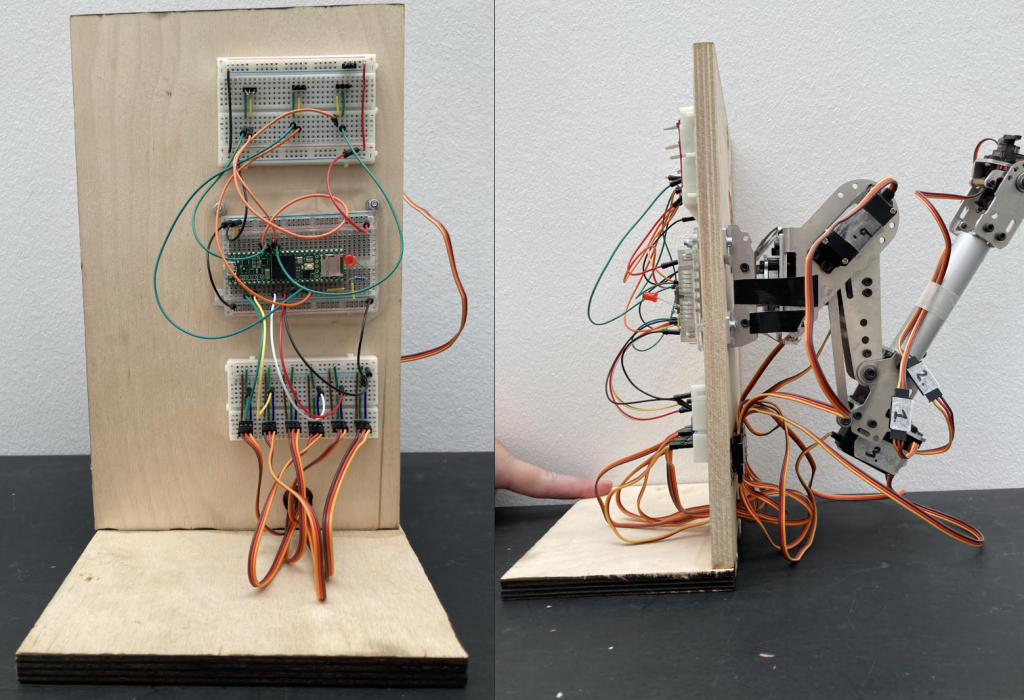
脑机接口:允许非语言个体通过脑活动控制机械臂或计算机界面,执行日常任务。
EEG技术为非语言个体提供了突破沟通障碍的可能,通过脑波实现自我表达与社会参与。随着算法与硬件技术的持续优化,EEG交流系统有望成为连接无声世界与外界的重要桥梁。
Wolpaw, J. R., & Wolpaw, E. W. (2012). Brain-computer interfaces: principles and practice. Oxford University Press.
Lebedev, M. A., & Nicolelis, M. A. (2006). Brain–machine interfaces: past, present and future. Trends in neurosciences, 29(9), 536-546.
Kübler, A., & Birbaumer, N. (2008). Brain-computer interfaces and communication in paralysis. Clinical neurophysiology, 119(11), 2658-2666.
Sellers, E. W., & Donchin, E. (2006). A P300-based brain–computer interface: initial tests by ALS patients. Clinical Neurophysiology, 117(3), 538-548.
Millán, J. D. R., et al. (2004). Noninvasive brain-actuated control of a mobile robot by human EEG. IEEE Transactions on Biomedical Engineering, 51(6), 1026-1033.
Daly, J. J., & Wolpaw, J. R. (2008). Brain-computer interfaces in neurological rehabilitation. The Lancet Neurology, 7(11), 1032-1043.
Birbaumer, N., & Cohen, L. G. (2007). Brain–computer interfaces: communication and restoration of movement in paralysis. Journal of Physiology-Paris, 99(4-6), 297-306.
Guger, C., et al. (2009). How many people are able to control a P300-based brain–computer interface?. Neuroscience letters, 462(1), 94-98.
Birbaumer, N., et al. (1999). A spelling device for the paralysed. Nature, 398(6725), 297-298.
McCane, L. M., et al. (2015). Brain–computer interface evaluation in people with amyotrophic lateral sclerosis. Amyotrophic Lateral Sclerosis and Frontotemporal Degeneration, 16(3-4), 221-229.





 扫码获取报价